How to Find a Manufacturer in China: Four Routes, Compared
 Hidayat Khan·Sep 2026·12 min read
Finding suppliers in China is not the hard part. Type your product into Alibaba and you will have four thousand of them before you finish your coffee. The hard part is that finding is free and filtering is expensive, and almost every bad first order I get called about came from a buyer who spent their effort on the wrong one of those two.
There are four routes to a Chinese manufacturer. Most buyers use exactly one of them, usually the free one, and then wonder why the factory in the photos turned out to belong to someone else.
Here is what each route actually costs you in time and money, how well each one filters, and the two parts nobody writes about: the enquiry that gets answered, and how to get from forty candidates to one without losing a month.
Which route should you actually use?
Use a platform to build the longlist, then use one of the other three to confirm it. The platform is your search engine, not your filter. That single habit prevents most first-order disasters.
Beyond that, it comes down to order size and whether you can get on a plane:
- First order under $5,000: platforms plus a paid sample. The trip does not pay for itself yet, and a sourcing agent’s flat fee is a large share of the order.
- $5,000 to $50,000: platforms to shortlist, then either a sourcing agent or a third-party audit before the deposit. This is the range where a bad supplier hurts most and the verification cost is small next to the order.
- Above $50,000, or anything with tooling: go, or send someone. At that value you are buying a relationship and a production line, not a product.
- Category with a known cluster: the market beats the platform. If your product comes from one town, go to that town.
Route 1: the B2B platforms
Alibaba, Made-in-China.com, Global Sources and 1688 are where nearly everyone starts, and that is fine. They are the fastest way in the world to build a longlist. What they are not is a filter.
A platform ranks on completeness of listing, response rate and advertising spend. None of those measure whether a company owns a factory. A well-optimised listing tells you a company is good at selling on that platform, which is a different skill from making your product, and often a different company entirely.
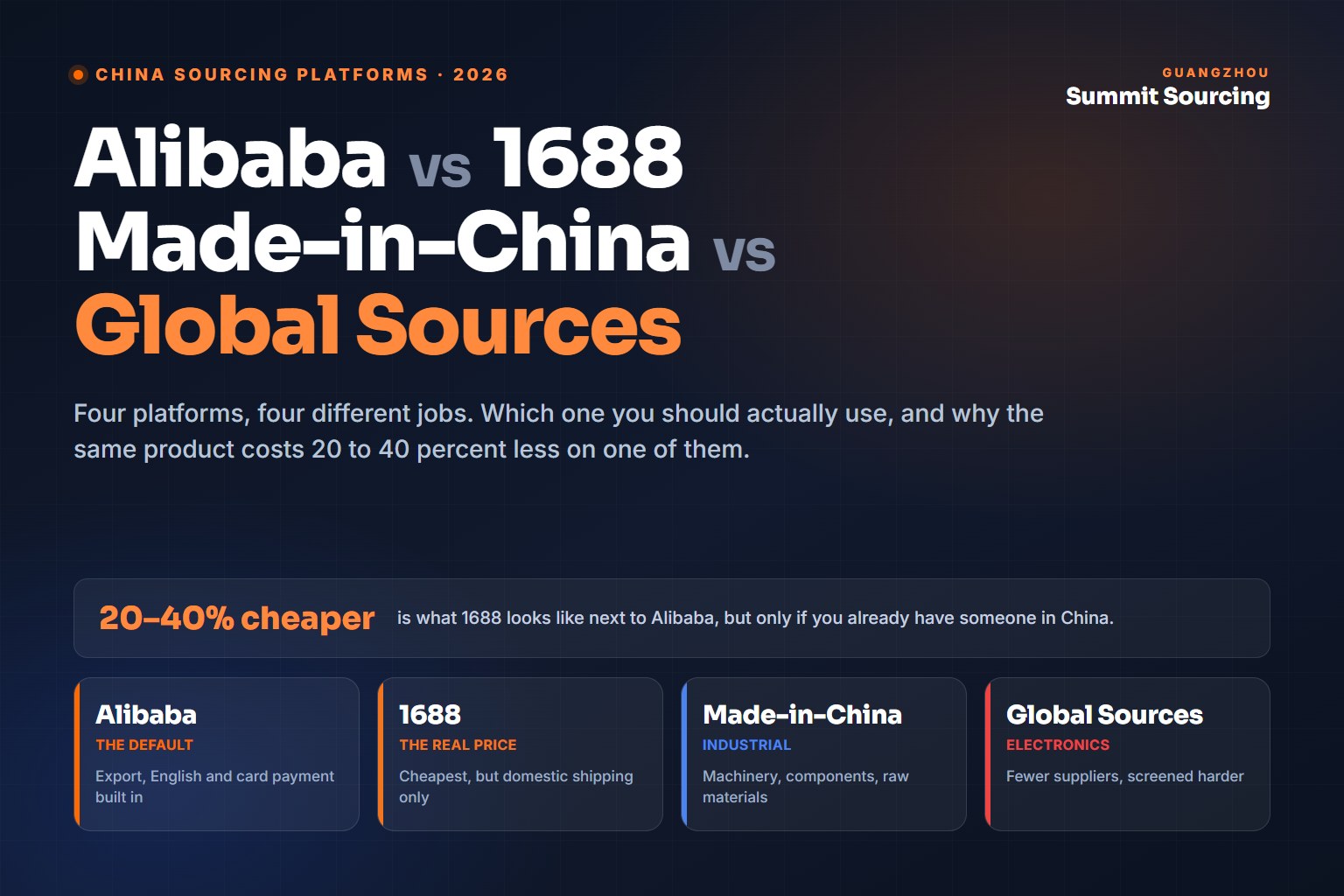
The four platforms are not interchangeable either — they serve different buyers, ship differently and price differently. I have compared them properly in the four-platform comparison, including why 1688 looks so much cheaper and when that saving is real.
A platform is a directory, not a filter. Treat every listing as a claim you still have to check, not a fact you have already established.
Route 2: the Canton Fair and the industry shows
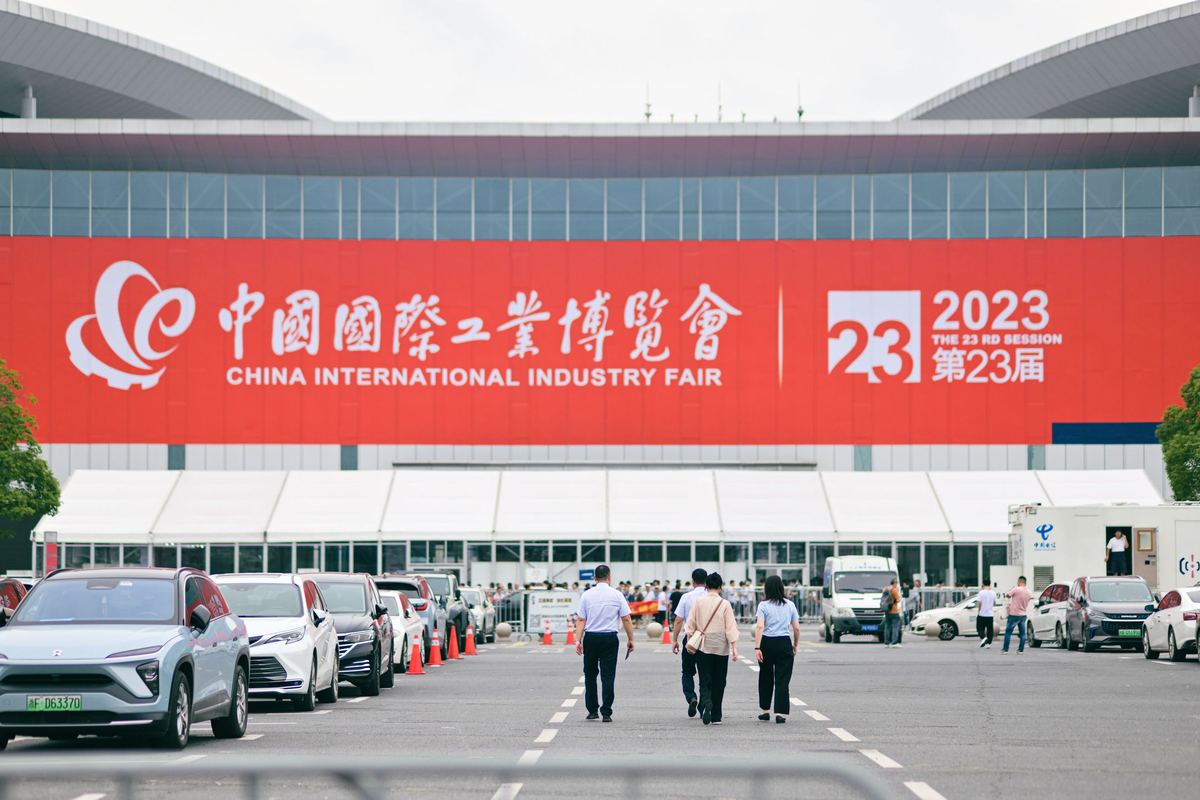
The Canton Fair is the largest sourcing event on earth and the single most efficient way to compare a lot of suppliers quickly. The 140th session runs 15 October to 4 November 2026 in Guangzhou across three phases, with about 75,700 booths over 1.55 million square metres, 54 product zones and more than 32,000 exhibitors including roughly 2,800 brand enterprises. The previous session drew 314,000 overseas buyers from 220 countries and regions.
The reason it filters better than a platform is money. A booth costs real money and weeks of preparation, which quietly removes the companies whose entire operation is a listing and a WeChat account. It does not remove trading companies — plenty exhibit, legitimately — but it does raise the floor.
Phases matter, because the wrong phase is a wasted flight. Electronics, machinery and vehicles lead Phase 1; home and construction products Phase 2; fashion, health, food and leisure goods Phase 3. Full detail on planning the trip is in the Canton Fair playbook.
Route 3: the wholesale markets and the clusters
China’s manufacturing is clustered to a degree that surprises people. One town makes most of the world’s lighting; another most of its ceramic tile; another its textiles. If your product has a cluster, standing in it for two days will teach you more than two months of messaging.
The markets are also the only route where you can hold the goods before you commit, which is why they suit small runs, mixed orders and anything where finish and feel matter more than a spec sheet. The trade-off is that you are seeing product, not production — the stall is rarely the factory.
Which city to fly into is a real decision with real cost consequences: see Guangzhou vs Shenzhen vs Yiwu vs Ningbo, and for the category-specific towns, the specialist markets guide.
Route 4: a sourcing agent
An agent is the only route where filtering is the actual deliverable rather than a side effect. You are not paying someone to find suppliers — you could do that yourself in an afternoon. You are paying for the part that needs Chinese, local presence and the ability to turn up unannounced.
It makes sense when you cannot travel, cannot read the business licence, or when the order is large enough that a few hundred dollars of verification is obviously cheap insurance. It makes less sense on a $2,000 first order, where the fee is a big fraction of the spend.
What it should cost, and the four pricing models to expect, are set out in the sourcing agent cost breakdown.
The RFQ that actually gets a reply
This is where most sourcing efforts quietly die. You message thirty suppliers, six reply, four of those are useless, and you conclude the platform is bad. The platform was fine. The enquiry was.
Understand what is happening on the other end. A factory sales rep opens dozens of enquiries a day, most from people who will never buy anything. They are triaging, fast, on two questions: is this person real, and is this order worth the setup? Your RFQ has about fifteen seconds to answer both.
The two lines that do the most work are quantity and target price, and they are the two most buyers leave out, usually because they think naming a number weakens their negotiating position. It does the opposite. A target price is a filter: factories that cannot make it at that number say so immediately, and you have saved a week. Factories that can will tell you what they would have to change to get there, which is the most useful reply you can get.
Send it to more suppliers than feels sensible. A structured RFQ to twenty suppliers will typically get you eight real quotes. The same message to five gets you one or two, and you will draw conclusions from a sample too small to mean anything.
How to shortlist without losing three weeks
The mistake is spending the effort at the top of the funnel, comparing listings and photographs, where the information is least reliable and everyone looks identical. The cheap filters should be fast and brutal; the expensive ones should be reserved for two or three companies.
Notice where the time actually goes. Cutting forty candidates to twelve should take an afternoon and is mostly mechanical: does their licensed business scope match what they claim to make, and do they actually work in your category? Everything after that is a real investment, and it should only be spent on suppliers who have already earned it by answering a proper RFQ properly.
Two things worth building into the process: always keep a second supplier warm through the sample stage, because a sole-source shortlist gives you nothing to negotiate with; and never let the cheapest quote skip a step. Underpricing is the most common bait in supplier scams, and a number well below every other quote is information, not a bargain.
The step that decides whether any of this worked
Finding a manufacturer and verifying one are different jobs, and this article has only covered the first. Everything above gets you a name and a quote. None of it establishes that the company exists as described, owns the factory in the photographs, or is legally licensed to make what you are ordering.
That is the step where money is actually lost, and it is worth doing properly before a deposit leaves your account: how to verify a Chinese supplier before you send payment covers the registry checks, the unannounced video walkthrough and the red flags that mean stop.
Frequently asked questions
What is the best way to find a manufacturer in China?
Use a B2B platform such as Alibaba or Made-in-China to build a longlist, then confirm with a route that actually filters: the Canton Fair, a visit to the relevant wholesale cluster, or a sourcing agent. Platforms are search engines, not filters. A listing reflects marketing spend and response rate, not whether a company owns a factory.
How do I know if a Chinese supplier is a factory or a trading company?
Match their licensed business scope against what they claim to manufacture, check that the registered address is in an industrial zone rather than an office tower, and ask for an unannounced live video walkthrough of the production line. A real factory can show you the line on short notice; a trading company stalls, sends old footage or shows you a showroom.
How many suppliers should I contact when sourcing from China?
Around twenty for a structured RFQ, which typically returns about eight real quotes. Contacting five usually yields one or two replies, which is too small a sample to compare against. Then narrow hard: roughly forty candidates down to twelve on business scope, five on RFQ quality, two on a live video walkthrough, and one on a paid production sample.
Why do Chinese suppliers ignore my enquiry?
Almost always because the enquiry did not answer the two questions a sales rep is triaging for: is this buyer real, and is the order worth the setup. Include your first order quantity and expected repeat, a target unit price or range, only the specification that matters, your destination and Incoterm, and one line on who you are. Leaving out quantity and target price reads as a tyre-kicker.
Should I name a target price in my RFQ?
Yes. Most buyers withhold it believing it weakens their position, but it works as a filter. Factories that cannot produce at that number say so straight away, saving you a week, and those that can will explain what would have to change to hit it, which is the most useful reply you can get.
Is it worth going to the Canton Fair to find suppliers?
It is if you are comparing many suppliers in one category, or your order is large enough to justify the flights. The 140th session runs 15 October to 4 November 2026 across three phases with more than 32,000 exhibitors. A booth costs real money and weeks of preparation, which removes companies whose whole operation is a listing, so it filters better than a platform. Go to the right phase: the wrong one is a wasted trip.
Key takeaways
- Finding suppliers is free and filtering is expensive. Almost every bad first order comes from a buyer who optimised the wrong one.
- Use a platform to build the longlist, then a second route to confirm it. Platforms rank on marketing spend, not manufacturing capability.
- The 140th Canton Fair runs 15 October to 4 November 2026, three phases, 32,000+ exhibitors. Go to the right phase or the trip is wasted.
- If your product has a manufacturing cluster, two days standing in it beats two months of messaging.
- An RFQ needs six lines. Quantity and target price do the most work and are the two most buyers leave out.
- Send the RFQ to about twenty suppliers to get roughly eight usable quotes. Five contacts is too small a sample to judge from.
- Narrow 40 to 12 to 5 to 2 to 1, spending your time at the bottom of the funnel where the information is reliable.
Sources
- China Import and Export Fair (Canton Fair), 140th session dates, phases, booth count and exhibition area, retrieved 2026-09-08, cantonfair.net
- Canton Fair autumn 2026 phase schedule and product categories, retrieved 2026-09-08, yiwuagent.com
- Overseas buyer attendance at the previous session (314,000 buyers from 220 countries and regions) is as reported by the fair organisers and widely republished; treat it as an organiser figure rather than an independently audited one.
- Supplier counts published by B2B platforms are self-reported and are not audited. They are useful as indicators of scale only.
- Sourcing agent fee ranges are the rates we see across the market in 2026 and our own published pricing, not an industry survey.
Want the shortlist done for you?
We are in Guangzhou. Tell us the product and we will come back with three to five vetted suppliers, business licences checked, factories walked, and a transparent report on each.
Get a free quote