Canton Fair 2026: A First-Time Importer's Playbook
 Hidayat Khan·Jun 2026·9 min read·Last reviewed Jun 2026
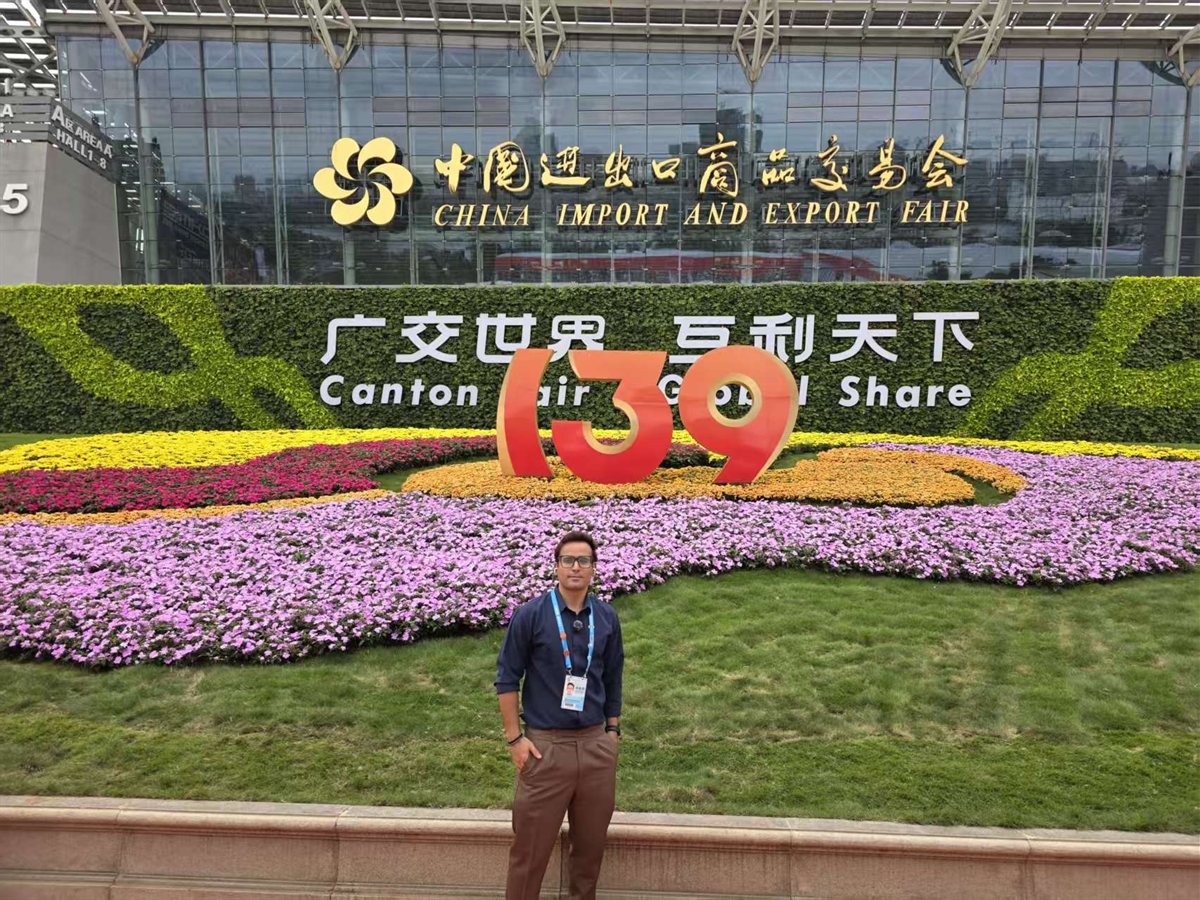
I wish I had known that Canton Fair is not just about collecting catalogs. It is about filtering suppliers fast. My advice to anyone going for the first time: go in with a clear product list, take photos and videos, record booth numbers, and shortlist only the suppliers who can answer your questions clearly. Otherwise you leave with hundreds of contacts but no real sourcing direction.
I have been to every Canton Fair since 2020. Twelve sessions across spring and autumn, more than 30 days walking the Pazhou Complex floors, hundreds of supplier conversations, and a handful of long-term factory partners that came out of those conversations. This guide is what I tell every client who books me to walk the fair with them. If you are planning your first trip in 2026, or your second trip with a better plan, read this end to end.
The Canton Fair 2026 dates, in your calendar
Canton Fair runs twice a year in Guangzhou. The spring 139th session has already wrapped. The autumn 140th session is the one most readers are planning around. Block these dates now if you have not already:
Spring (139th session)
- Phase 1: 15-19 April 2026
- Phase 2: 23-27 April 2026
- Phase 3: 1-5 May 2026
Autumn (140th session)
- Phase 1: 15-19 October 2026
- Phase 2: 23-27 October 2026
- Phase 3: 31 October - 4 November 2026
Each session runs for roughly three weeks, split into three phases. Each phase has a different product mix. You do not attend the whole fair. You attend the phase that matches your category, then go home.
As I write this, Phase 1 is about seven weeks out, which is exactly the window you want to be booking in. Hotels near Pazhou go first and the rooms left behind get expensive. If you need a visa rather than visa-free entry, start that now rather than in September. And if this is your first trip to China, I wrote a separate first-time visitor setup guide covering visas, the apps to install before you land, paying with a foreign card and the 24-hour police registration rule. Read that one alongside this.
What Canton Fair actually is
Canton Fair, officially the China Import and Export Fair, runs at the Pazhou Complex on the south side of Guangzhou. The complex is roughly the size of seven football stadiums lined up end to end. Around 25,000 exhibitors. More than 200,000 buyers across all three phases. It is the largest trade fair on earth by a wide margin, and it has been running since 1957.
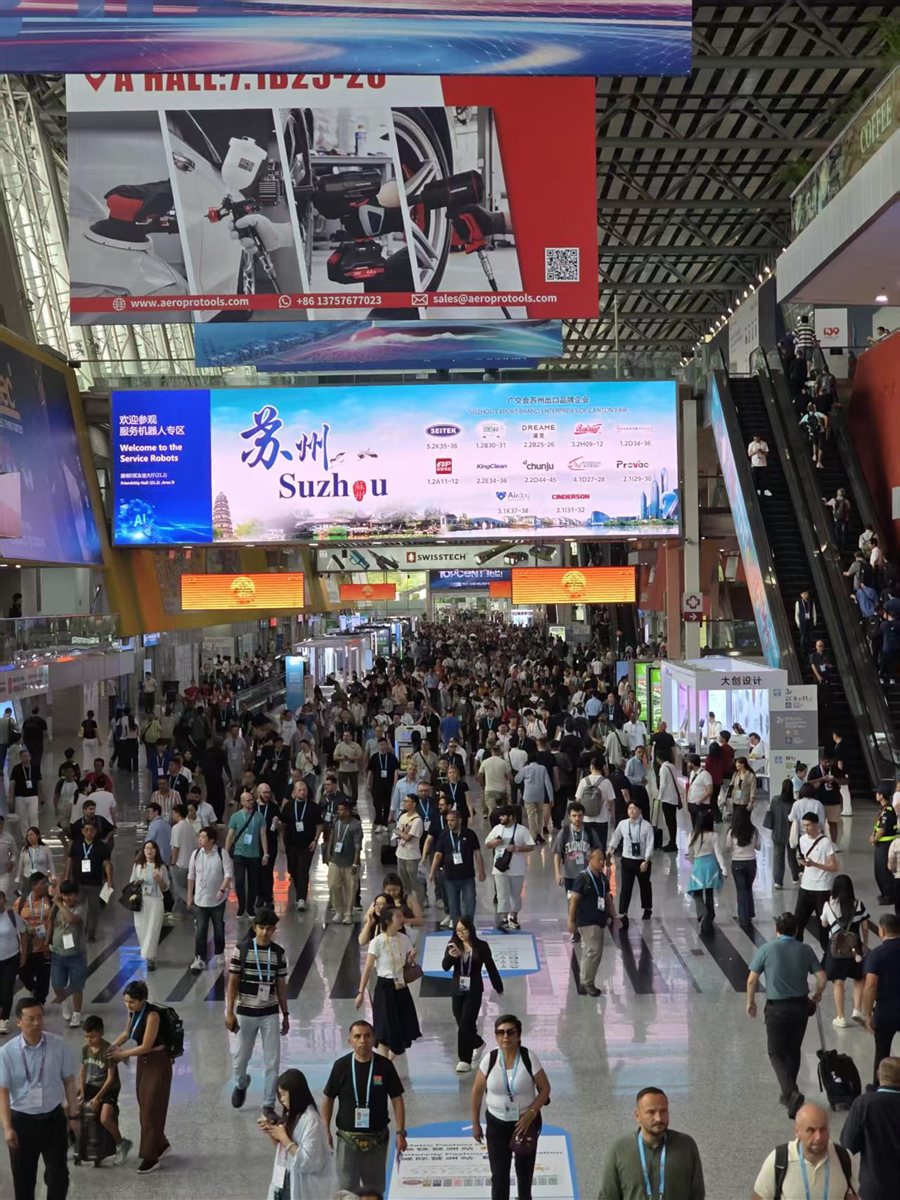
Inside a Phase 1 hall during the 139th session. The scale is hard to describe until you stand in it.
It splits into three phases because no single venue on earth could house every category at the same time. Here is what is in each:
- Phase 1: electronics, hardware, lighting, vehicles, machinery, building materials, chemicals, energy.
- Phase 2: home goods, decor, gifts, gardening, ceramics, glassware, kitchenware, furniture, sports and outdoor.
- Phase 3: textiles, apparel, shoes, bags, office supplies, medical equipment, food, personal care.
If you sell consumer electronics, you only need Phase 1. If you sell home decor and kitchenware, you only need Phase 2. If you sell apparel and footwear, you only need Phase 3. Buyers who try to attend all three phases in one trip burn out, miss the suppliers that matter, and learn nothing useful. Pick the phase that matches your category and use the days for that.
What I wish I had known the first time
Most first-timers walk in wide-eyed on day one and walk out on day four with a stack of business cards two inches thick. By the time they fly home, they cannot remember which supplier had the lights, which had the bikes, which one quoted FOB and which one quoted EXW. The cards become useless. The trip becomes a memory.
Canton Fair is not a collect-everything exercise. It is a filter. Your job over four days is to find the 5 to 10 suppliers worth a follow-up conversation, not the 200 booths whose name you have already forgotten.
Three habits fix this, and I do them on every trip:
- Bring a printed product list. Two or three columns: product name, target price, target MOQ. Show this to every booth you stop at. If the supplier cannot meet the price or MOQ in the first 60 seconds, you move on. The card stays in their hands, not yours.
- Photograph the booth number, not just the product. Every booth has a code like 16.2H04. Snap the product, then step back and snap the booth-number sign next to it. You will rebuild your shortlist from these photos alone, on the plane home.
- Record short videos of anything you might actually order. Fifteen seconds, walk around the product, point at the spec sheet, get the salesperson to say the price out loud. Future you, sitting on your laptop in another country, will be very grateful.
A real story from the 139th session
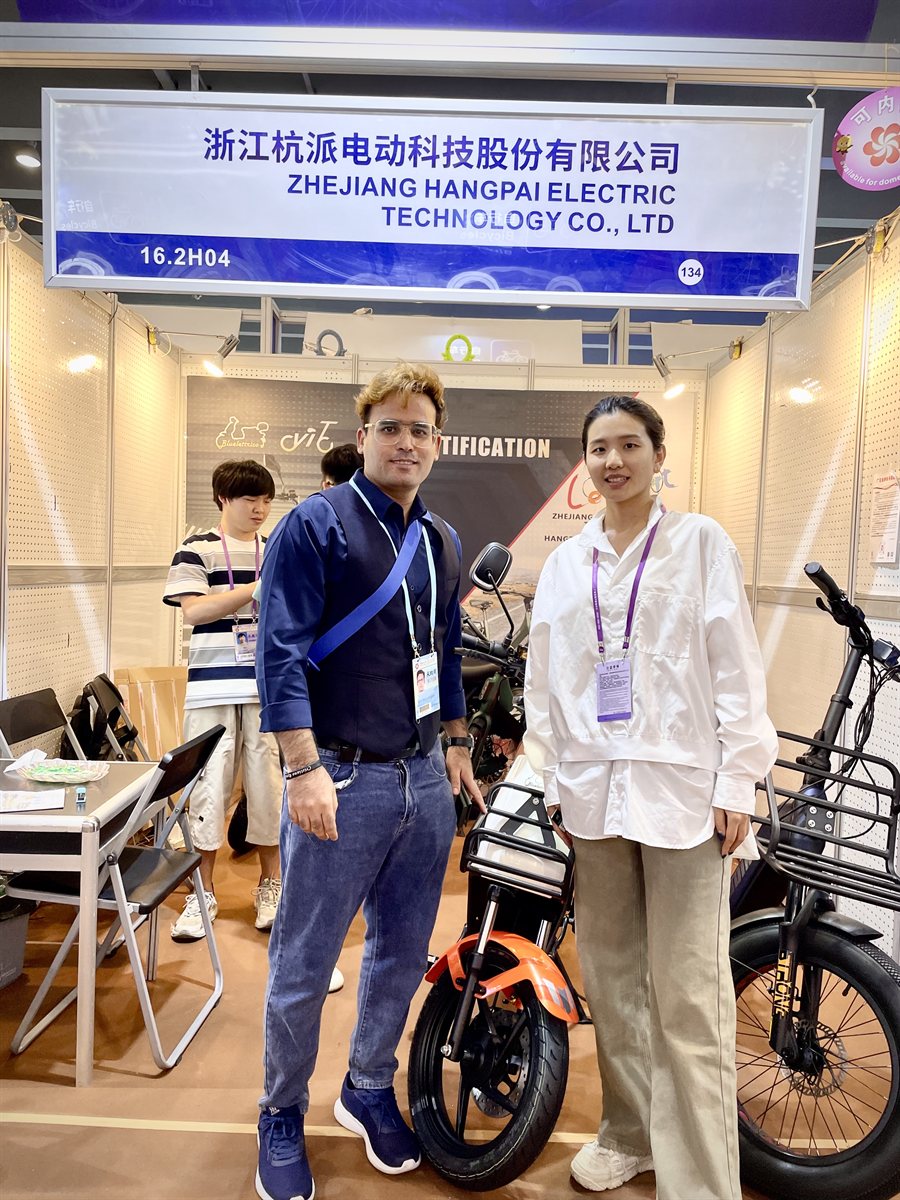
Booth 16.2H04, Zhejiang Hangpai Electric. The conversation that started here ended with a deal three weeks later in Ningbo.
I was at the 139th session this past April with a client who imports electric bikes and scooters to Europe. We had three days of Phase 1 to find the right OEM. Day one, we walked the lighting and electrical halls and tagged six suppliers worth following up on.
But the real value of the trip came after the fair closed. We took the high-speed train to Ningbo the next week and walked three of the factories the suppliers had pointed us to. Two of them were everything they had claimed. One was not. The one that was, we negotiated final terms with on site, in their meeting room, with the production manager in the conversation. The deal closed three weeks later.
That is the second half of Canton Fair that nobody tells you about. The fair gets you in the same room as the supplier. The factory visit afterwards is where the real deal closes. If you fly home after the fair without visiting at least two factories in person, you are leaving most of the value on the table.
Five mistakes first-timers make
- Trying to attend all three phases. If your product fits one phase, only attend that phase. The other phases drain your energy and teach you nothing about your category.
- Not booking the hotel early enough. Hotels near Pazhou go from ¥500 to ¥3,000 a night during the fair. Book at least three months in advance. Tianhe and Zhujiang New Town are the most convenient neighborhoods.
- Skipping business-card etiquette. In China, you give and receive a card with two hands, you read it before putting it away, and you do not write on it in front of the giver. Sloppy card handling marks you as inexperienced and quietly bumps the first quote up.
- Locking in prices on the spot. Most suppliers quote you a higher number at the fair than they will after the fair, by email, with your actual shipping volume in the conversation. Get the price list, the MOQ, the lead time, the contact information, and the booth number. Push for the real number later.
- Skipping the dinner invites. Many serious deals get shaped in restaurants and karaoke rooms after the fair, not in the booth. If a supplier invites you out, it is a signal they take you seriously. Going is not optional if you want the best terms.
A multi-year perspective on where the fair is heading
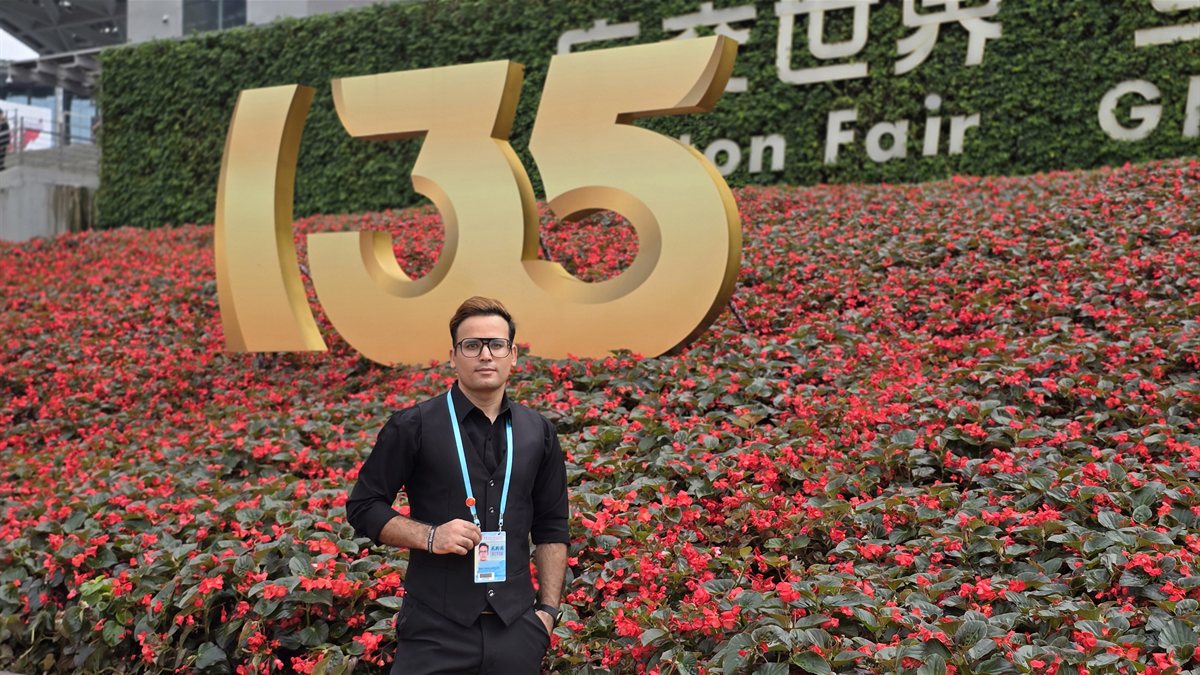
The 135th session, spring 2024. Two years on, the categories on the hall floor look noticeably different.
The fair changes session by session in a way that is invisible if you only go once. The 135th session in spring 2024 had a noticeably different feel from the 139th this April. More European buyers in 2024, more Middle Eastern and African buyers in 2026. Electric vehicle and smart-home booths went from a few aisles in 2024 to entire halls this year. AI-enabled hardware was everywhere in spring 2026 in a way it was not two years ago.
If you only attend once, you get a snapshot. If you attend twice a year for three years, you start to feel where the supply side is moving before it shows up in the trade press. That is one of the under-appreciated reasons to keep going. The trip is not just about your next order. It is about staying in the conversation.
Planning a Canton Fair trip in 2026?
We host buyers at every session. Drop your product category and the dates you are looking at, and we'll send a day-by-day plan.
Plan my Canton Fair tripShould you hire a sourcing agent for the fair?
Honest answer: it depends on the goal.
If you are coming to look, learn, and meet a few suppliers to email next month, you can do that alone. The fair is set up for it. Maps are clear, English signage is everywhere, and you will find your way.
If you are coming to find a real OEM partner, negotiate live, visit factories afterwards, and walk away with a signed order, an experienced agent makes the difference between a one-week trip and a three-month follow-up email cycle. Here is what we do on-site for clients who book us:
- Walk the floor with you, translating both the language and the unspoken context. Chinese business communication is high-context, suppliers tell you a lot with what they do not say.
- Filter out booths that are middlemen or trading companies pretending to be factories. They are roughly a third of every aisle. Spotting them saves you weeks.
- Arrange factory visits before the fair so you go to Ningbo, Yiwu, Foshan or Shenzhen with appointments already booked, not cold emails sent after you fly home.
- Negotiate in Chinese alongside English. The price usually moves 10 to 20 percent.
- Handle the post-fair sample protocol, the QC, and the freight, so you fly home and the rest happens without you.
Frequently asked questions
Do I need a visa to attend?
Most nationalities need a visa to enter China. Apply at least one month before your trip through your nearest Chinese consulate or visa centre. Canton Fair can issue an invitation letter on request to support the application.
Is entry free?
Yes for foreign buyers. Register online before you travel, or at the on-site registration counter when you arrive. Bring your passport for badge collection.
Which language is spoken at the booths?
English is widely spoken. Most suppliers staff at least one English-speaking salesperson during the fair. Bringing a bilingual sourcing agent helps when conversations get technical or you want to negotiate in Chinese alongside English.
How long until I have my first shipment?
For most categories, expect 8 to 12 weeks from the first booth conversation to the first order shipped. The fair itself is week one. Samples, QC and contracts take 4 to 6 weeks. The first production run and delivery is another 4 to 6 weeks on top.
Is it worth attending if I already have a supplier?
Yes, for two reasons. First, it keeps your existing supplier honest. They know you have alternatives standing one booth away. Second, the fair is the fastest way to see where the category is heading. New materials, new specs, new minimum-order tiers. Three days of walking can save you six months of catching up.
Key takeaways
- Canton Fair 2026: spring 15 April to 5 May, autumn 15 October to 4 November. Pick the phase that matches your category and only attend that phase.
- The fair is a filter, not a collection drive. Bring a printed product list, photograph booth numbers, and shortlist 5-10 real candidates, not 200 cards.
- The deal closes after the fair, at the factory, not in the booth. Plan at least two factory visits the week after.
- Do not lock in prices on the spot. Get the price list, push for the real number after the fair with your real volume in the conversation.
- If you are coming for a real OEM partner, hire a bilingual agent. The price moves 10 to 20 percent in your favour when you negotiate in both languages.
Walking Canton Fair in 2026? Let us walk it with you.
We host buyers at every session. Day-by-day plans, supplier shortlists, factory visits in Ningbo / Yiwu / Foshan, and signed orders by the time you fly home.
Plan your Canton Fair visit with us