DDP, DAP, FOB and EXW Explained for New Importers
 Hidayat Khan·Feb 2026·9 min read·Last reviewed Jun 2026
A supplier sends you a quote, and at the bottom sits a three-letter code: EXW, FOB, DAP or DDP. That code decides who pays for freight, who handles customs, and where your responsibility for the goods starts and stops, and getting it wrong can quietly add 20 to 40 percent to a price you thought was final. This guide breaks down the four terms new importers meet most, shows you the costs that hide inside each one, and gives you a simple way to choose the right term for your next order.
The simple meaning of EXW, FOB, DAP and DDP
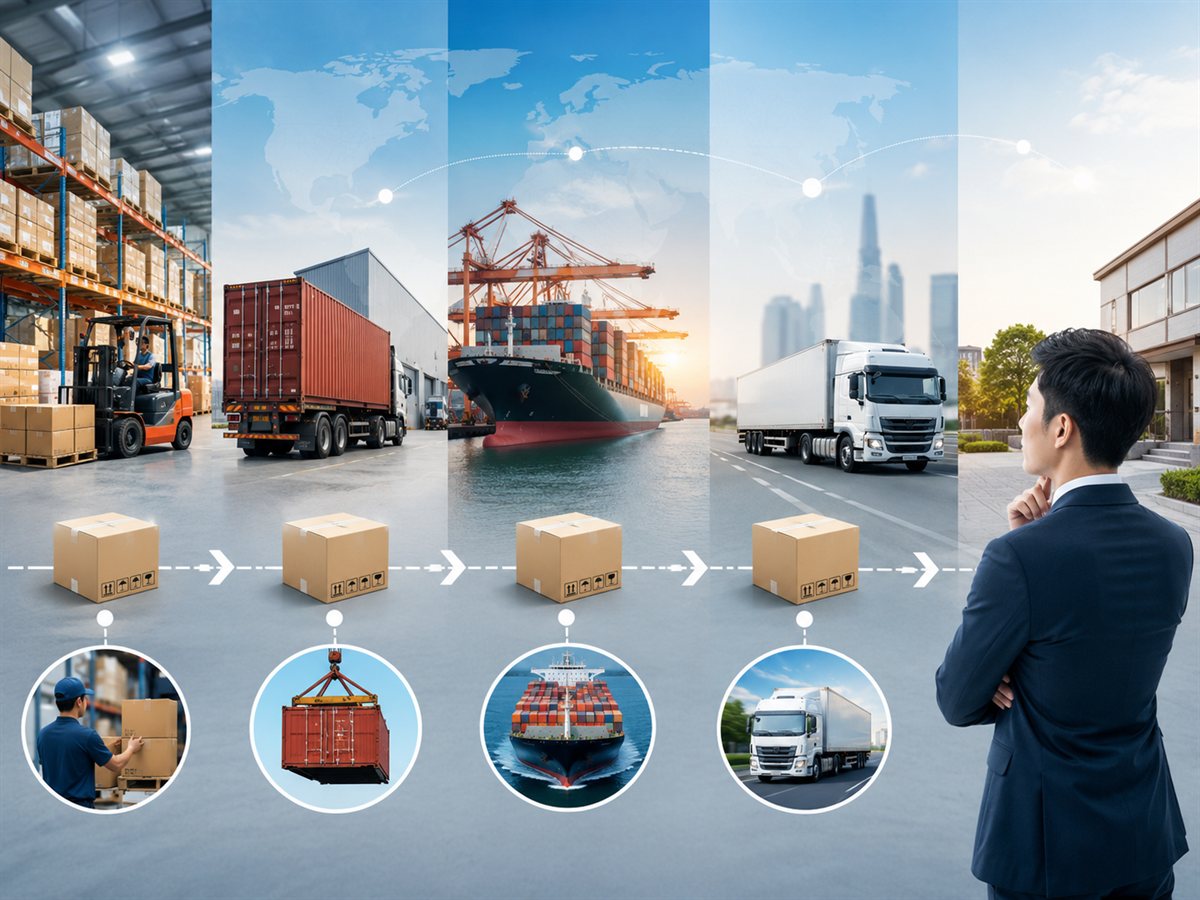
These four codes are Incoterms, internationally agreed rules that split the cost and risk of moving goods between a seller and a buyer. The easiest way to understand them is to picture your shipment as a journey from the factory floor in China to your warehouse, and ask one question at each stage: who is responsible right now, the supplier or you? Each term simply moves the handover point further along that journey.
EXW (Ex Works) means the supplier's job ends the moment the goods are packed and ready at their factory door. You arrange and pay for everything after that, local trucking, export clearance, freight, import duties and final delivery. It gives you maximum control and maximum work.
FOB (Free On Board) shifts the handover to the loading port. The supplier delivers the goods, clears them for export, and loads them onto the vessel you have nominated. From the ship's rail onward, the sea freight, insurance, import duty and final delivery are yours. DAP (Delivered At Place) goes much further: the supplier carries the goods all the way to your chosen address, but you still clear customs and pay the import duties and taxes. DDP (Delivered Duty Paid) is the all-inclusive option, the supplier delivers to your door with everything paid, customs and duties included. It is the simplest for you and the heaviest obligation for them.
Which shipping term is best for beginners
For most first-time importers, FOB is the sensible default, and DDP is the easy button. FOB is the term experienced buyers quietly standardise on because it draws a clean line: the supplier handles everything inside China, you control the shipping from the port onward. That means you choose your own freight forwarder, see the real ocean-freight cost instead of a marked-up one buried in the unit price, and own the goods at a clear, documented point.
DDP is genuinely tempting when you are new, because a single number lands the goods at your door with nothing left to arrange. For a small first order it can be the right call, it removes customs paperwork and freight coordination while you are still learning. The trade-off is visibility: with DDP you usually cannot see how the total breaks down, so you are trusting the supplier's freight and duty figures completely.
EXW is the term we steer beginners away from. On paper it looks cheapest, but it dumps Chinese export clearance and inland transport on you, the part of the journey you have the least ability to manage from abroad. Unless you have a forwarder with a strong China presence, an EXW quote that looks low almost always grows once those local costs appear.
The cheapest-looking quote is rarely the cheapest order, the shipping term decides who pays for everything the price tag leaves out.
Hidden costs buyers often miss
The number on a quote is rarely the number you end up paying, and the gap is almost always made of fees that the chosen term leaves on your side of the line. New importers tend to compare a low EXW price against a higher FOB or DDP price and assume EXW wins, then get blindsided by everything EXW excludes.
Before you compare two quotes, make sure you are comparing the same finish line. Watch for these costs that frequently land on the buyer unexpectedly:
- Export clearance and local trucking inside China, yours under EXW, the supplier's under FOB and above
- Origin port charges, documentation and terminal handling fees at the loading port
- Destination port fees, customs brokerage and terminal handling at your end
- Import duty and VAT or sales tax, easy to forget, and often a double-digit percentage of value
- Final-mile delivery from the port or arrival hub to your actual warehouse
- Demurrage and storage if your goods sit at the port while paperwork is sorted out
Who handles customs clearance and duties
Customs happens twice on every international shipment, export clearance in China and import clearance in your country, and the term decides who is on the hook for each. This is where new importers get the biggest surprises, because import duty is a real cost that no Incoterm makes disappear; it only moves who pays it.
Under EXW, you are responsible for both sides, including arranging export clearance inside China, which is awkward to do from overseas. Under FOB, the supplier handles export clearance, and you handle import clearance and pay the duties and taxes in your own country. DAP keeps that same split for customs, the supplier delivers to your door but you remain the importer of record and settle the duty. Only DDP puts import clearance and duties on the supplier as well.
One caution on DDP: because the supplier is paying your import duty, some arrange clearance through low-visibility channels or under-declare value to keep their quoted price down. That can leave your goods exposed if customs questions the entry. If you import regularly, being the importer of record yourself, as you are under FOB, generally gives you cleaner records and more control.
DDP vs FOB for Amazon and e-commerce sellers
If you sell on Amazon or run a direct-to-consumer brand, the FOB-versus-DDP decision usually comes down to whether you want speed and simplicity now, or control and lower long-run cost later. DDP is popular with Amazon sellers for a reason: the supplier or their freight partner delivers straight to an Amazon fulfilment centre or your 3PL, duties paid, with you barely touching the logistics. For a seller juggling listings and ads who just needs stock to land, that convenience is worth a lot.
The catch is that DDP into Amazon hides the breakdown, and not every DDP route is set up to meet Amazon's strict delivery, labelling and appointment requirements, a rejected delivery can cost you far more than you saved. FOB gives you a forwarder who answers to you, transparent costs you can optimise as volume grows, and the ability to route stock through your own prep centre. As your order frequency rises, that visibility is usually where the real savings live.
A practical path: start on DDP for your first one or two orders to keep things simple, then move to FOB with a dedicated forwarder once your volumes justify managing the freight yourself.
How to choose the right shipping term for your order
Pick the term by being honest about how much of the logistics chain you can actually manage, not by which quote looks lowest. Run through a few questions and the right answer usually becomes obvious: Do you have a reliable freight forwarder? How experienced are you with import customs? How big and how frequent are your orders? How much does total-cost visibility matter to you versus pure convenience?
As a rough guide: choose DDP when you want zero logistics work and accept paying for that convenience; choose FOB when you have or can hire a forwarder and want control and clear costs; consider DAP when you want door delivery but prefer to stay the importer of record; and avoid EXW unless you have strong on-the-ground support in China. Whatever you pick, get the term and the exact handover point written into your contract, and ask the supplier to itemise what their price does and does not include.
If all of this still feels like a lot to weigh on your first order, it is, and it is exactly the kind of thing Summit Sourcing handles day to day. We help importers choose the right term, see the true landed cost, and avoid the hidden fees that turn a good price into a bad surprise.
Frequently asked questions
What is the difference between EXW, FOB, DAP and DDP?
These are Incoterms that split cost and risk between seller and buyer along the shipment journey. EXW means the supplier's job ends at their factory door. FOB hands over at the loading port. DAP delivers to your address but you still clear customs. DDP delivers to your door with customs and duties already paid by the supplier.
Which shipping term is best for first-time importers?
For most first-time importers, I recommend FOB as the sensible default and DDP as the easy button. FOB draws a clean line: the supplier handles everything inside China and you control shipping from the port. DDP lands the goods at your door with nothing to arrange, which can suit a small first order while you are still learning.
Why should I avoid EXW as a new importer?
EXW is the term we steer beginners away from. On paper it looks cheapest, but it dumps Chinese export clearance and inland transport on you, the part of the journey you can manage least from abroad. Unless you have a forwarder with a strong China presence, a low EXW quote almost always grows once those local costs appear.
Who pays import duty and customs under each Incoterm?
Customs happens twice, export in China and import in your country, and the term decides who pays. Under EXW you handle both. Under FOB and DAP the supplier clears export, but you remain importer of record and pay import duty and taxes. Only DDP puts import clearance and duties on the supplier as well.
Should Amazon sellers use DDP or FOB?
DDP is popular with Amazon sellers because the supplier delivers straight to a fulfilment centre or 3PL, duties paid, with little logistics work for you. The catch is hidden costs and the risk of rejected deliveries. My practical advice: start on DDP for your first one or two orders, then move to FOB once volumes justify managing freight yourself.
Key takeaways
- Incoterms (EXW, FOB, DAP, DDP) decide who pays for freight, customs and duties, and where your risk begins.
- EXW looks cheapest but loads Chinese export and inland costs onto you; it is the hardest term for beginners.
- FOB is the experienced importer's default: clean handover at the port, transparent freight costs, full control from there.
- DDP is the easy button, door delivery with duties paid, but it hides the cost breakdown and can use risky clearance.
- Import duty and VAT never disappear; the term only changes who pays them and when.
- Match the term to how much of the logistics chain you can realistically manage, then write it into your contract.
Sourcing from China? Let us handle the hard part.
Tell us what you're sourcing and we'll come back with a clear plan and quote within 24 hours.
Get a project assessment